

Let enterprises have a home, and I am the entrepreneur.
Blog
Manyang Model: Prioritizing Industrial Ecology, Providing a Home for Millions in Manufacturing
Wanyang Group, through practical exploration, has summarized the Wanyang model for the operation and service of small and medium-sized manufacturing enterprises' agglomeration platforms. Relying on its strong economic strength, Wanyang Group has created an innovative operation model of "industrial agglomeration, integration of industry and city, resource sharing, and interaction between industry and finance", opening up a new path for industrial investment promotion.
Wanyang Group, headquartered in Wenzhou, is a manufacturing cluster platform operator and SME service provider. Its "Wanyang Innovation Cities" built across various locations are specifically designed to serve SMEs. Against the backdrop of promoting supply-side structural reforms, optimizing the business environment, and guiding the transformation and upgrading of traditional industries, Wanyang Group has, through practical exploration, summarized the Wanyang model for the operation and service of manufacturing SME cluster platforms. Leveraging its strong economic strength, Wanyang Group has created an innovative operation model of "industrial aggregation, integration of industry and city, resource sharing, and interaction between industry and finance," forging a new path for industrial investment attraction. Under this new model, the Wanyang Innovation Cities built by Wanyang in various places are manufacturing cluster platforms integrating manufacturing R&D, e-commerce, warehousing and logistics, production and life support, financial services, and smart park management. With multiple business formats, they form a scientifically planned and rationally laid-out industrial new city, opening a new channel for the transformation, upgrading, and aggregation transfer of manufacturing industries. Currently, more than 100 Wanyang Innovation City parks have been completed or are under construction in the Yangtze River Delta, the Pearl River Delta, and key regional central cities, covering an area of over 70 million square meters and capable of accommodating more than 16,000 small and medium-sized manufacturing enterprises.
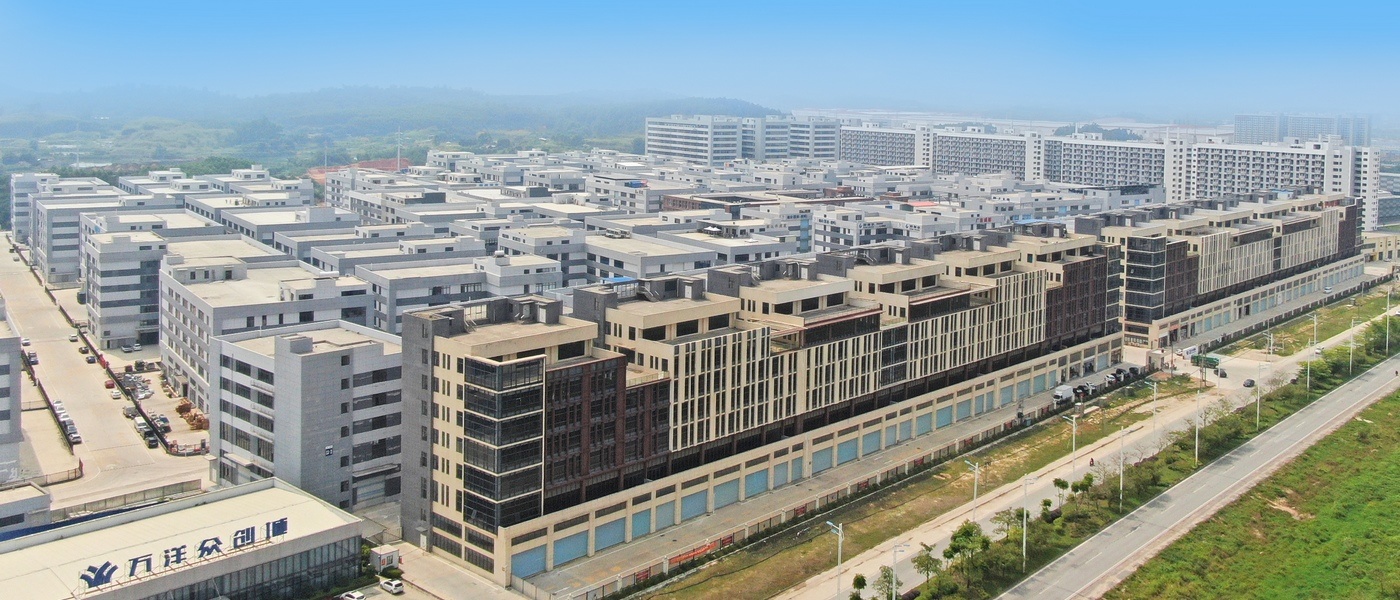
On-site view of Zhaoqing Wanyang Innovation City located in Zhaoqing High-tech Zone
Currently, under the dual pressure of the epidemic and the international economic situation, the manufacturing industry is facing the pressure of transformation and upgrading. Numerous SMEs are located in simple factories or illegal buildings in the urban-rural fringe areas. They face challenges such as land acquisition difficulties and financing difficulties resulting from the transformation. To address this issue, Wanyang Innovation City develops its parks with an industrial mindset. Through full industrial chain investment attraction, it achieves a high degree of aggregation of upstream and downstream SMEs within the park, promoting the high-quality development of SMEs in the region and effectively avoiding the phenomenon of "migratory" enterprises. By building an integrated industrial chain platform and gathering a large number of high-tech R&D industrial chains, it maintains a strong supply chain relationship with surrounding manufacturing industries. This effectively promotes high-degree cooperation between upstream and downstream industries, forming an open ecological balance of secondary and tertiary industries. This significantly reduces enterprise costs, enhances cost advantages, increases core market competitiveness, and lays a solid foundation for the city's pillar industries.
Industrial parks are fertile ground for the growth of SMEs and an important carrier for regional economic transformation. Wanyang Innovation City adopts a planning-first approach, developing standardized vertical factories, using vertical space to maximize land use, achieving high-rise and specialized industrial plants. Vertical factories overcome the past problems of sprawling layouts, poor environments, and serious safety hazards. The industrial land plot ratio can reach 2.5 or more, freeing up space for urban renewal, achieving land-saving and intensive land use, and greatly improving the per-mu efficiency of the manufacturing industry. In park operation, Wanyang Innovation City introduces the concept of group planning, constructing three systems: the "blue-collar life service system," the "SME cluster production service system," and the "public service undertaking system." Through Wanyang's self-owned properties, the park is managed uniformly, realizing integrated industrial and urban development. The park is equipped with employee dormitories, central canteens, Wanyang Plaza, supermarkets, business hotels, talent markets, medical and educational facilities, providing one-stop services for catering, accommodation, shopping, and leisure for industrial workers. This creates a high-quality production and living environment for enterprises and employees, allowing them to enjoy city life at their doorstep and find factory jobs nearby. The independently developed intelligent park management system, integrating social, mobile, big data, and cloud technologies into an Internet+ platform, realizes one-card access to production and property management. It collects production and living data in real-time, providing smart services and scientific management to park enterprises, allowing them to move in with just their bags, saving manpower, materials, and effort. At the same time, it generates long-term stable revenue for Wanyang. Through professional operation and management, Wanyang assists the local government in social management, providing a platform for guiding the city's industries, reducing supporting investments, saving administrative costs, and promoting local economic transformation and development, achieving a win-win situation for all three parties.
The success of Wanyang Innovation City has solved the problems faced by SMEs in transformation and development, and has also launched Wanyang Group on a new journey of brand building. To address the concerns of enterprises in the park and improve its internal brand strength, Wanyang Group actively plans industrial salon activities centered around the park as a way to showcase its value. It proactively connects various resources from government, industry, academia, research, and finance, forming a regular intellectual exchange network. Wanyang Innovation Cities across the country actively build industrial social networks, providing targeted public services such as policy consultation and application assistance for enterprises, strengthening resource development and connectivity capabilities, and building a resource platform for park enterprises and their ecosystem partners to promote sustainable cooperation and exchange. In brand promotion, Wanyang uses a communication matrix mainly consisting of park self-media, professional media, and traditional and online media. Through a series of interviews with thousands of enterprises, it opens channels for media communication, providing a platform for park enterprises to showcase their brand image, achieving both comprehensive coverage and precise empowerment of marketing.
Manufacturing is the foundation of a city, and it is an important carrier for gathering capital, people, and logistics. We cannot abandon industry or manufacturing. The "Wanyang Model" fully integrates local realities. Whether it is providing services, constructing plants, or pursuing integrated development, the ultimate goal is to efficiently invest in industrial plants, provide homes for millions of manufacturers, and blaze a unique path of modernization transformation prioritizing an "industrial park + community" industrial ecosystem. The success of the Wanyang model also shows that we should make full use of policy synergy, drive improvements in local labor productivity, thus enabling sustainable consumption growth driven by household income growth. We must adhere to goal-oriented and results-oriented approaches, promoting rapid project implementation and effectiveness. Turning investment and consumption into essential components of economic growth is the key to innovative development.
Written by Zhang Ruidong
© 2021 Wanyang Zhongchuangcheng Investment Group Co., Ltd. ALL RIGHTS RESERVED.SEOWebsite Construction:China Enterprise Power Wenzhou
Wangiantong Platform
WeChat Official Account
© 2021 Wanyang Zhongchuangcheng Investment Group Co., Ltd. ALL RIGHTS RESERVED.SEOWebsite Construction:China Enterprise Power Wenzhou